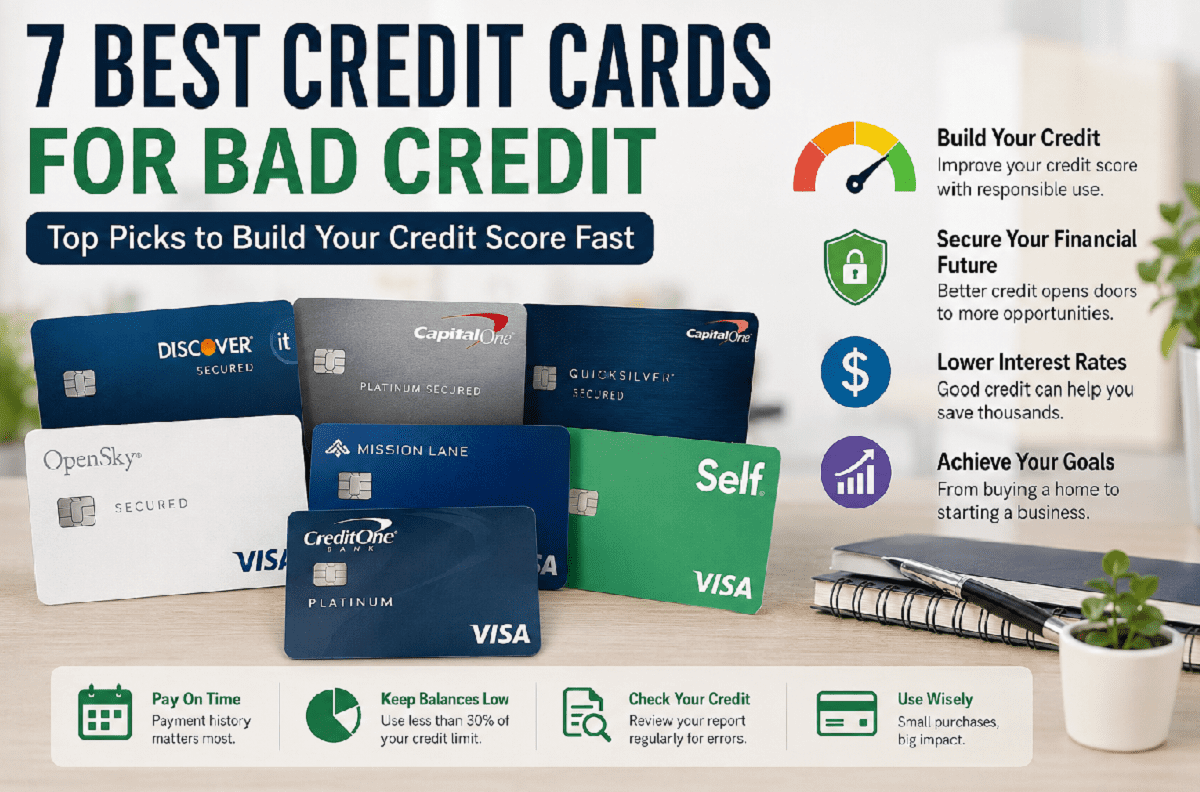
Discover the 7 best credit cards for bad credit in 2026. Compare fees, rewards, approval odds, and learn how to rebuild your credit score faster.
Table of Contents
7 Best Credit Cards for Bad Credit in 2026
Having a bad credit score doesn’t mean you’re locked out of the financial system forever. Millions of people rebuild their credit every year by using the right credit card responsibly. Whether your credit suffered because of missed payments, high debt, or limited credit history, choosing the right card can help you get back on track.
The best credit cards for bad credit are designed to give people a second chance. Many report your payment activity to the major credit bureaus, helping improve your credit score over time when used responsibly. Some even offer rewards, cash back, or opportunities to upgrade to better cards after demonstrating good payment habits.
In this guide, we’ll explore the 7 best credit cards for bad credit in 2026, compare their features, discuss their pros and cons, and explain how to choose the right one for your financial goals.
Why You Need a Credit Card for Bad Credit
A low credit score makes it difficult to qualify for loans, mortgages, rental applications, and even some jobs. Using a credit-building credit card responsibly can help establish positive payment history, which is the most important factor in your credit score.
A good credit-building card allows you to:
- Improve your payment history
- Build positive credit habits
- Increase your credit score gradually
- Lower your future borrowing costs
- Qualify for better credit cards later
- Build financial confidence
The key is using your card responsibly by paying your balance on time and keeping your credit utilization low.
How We Selected the Best Credit Cards
Not every card marketed for bad credit is worth applying for. We evaluated cards based on several important factors.
Approval Odds
Cards with flexible approval requirements are generally better for people with poor or limited credit histories.
Annual Fees
Many bad-credit cards charge annual fees. We prioritized cards that provide good value for the cost.
Security Deposit Requirements
For secured cards, we considered how much money you need to deposit and whether that deposit is refundable.
Credit Bureau Reporting
Cards that report to all three major credit bureaus help maximize your credit-building potential.
Upgrade Opportunities
Some cards automatically review your account and allow you to graduate to an unsecured card after responsible use.
1. Capital One Platinum Secured
One of the most recommended secured credit cards for rebuilding credit is the Capital One Platinum Secured card.
Key Features
- Low refundable security deposit
- Reports to all three major credit bureaus
- Automatic credit line reviews
- No foreign transaction fees
- Mobile banking app
Pros
- Low deposit requirement
- Easy approval for many applicants
- No rewards needed to focus on rebuilding credit
- Potential for higher credit limits
Cons
- No cashback rewards
- Requires a security deposit
Best For
People who want an affordable secured card with a clear path toward improving their credit.
2. Discover it® Secured Credit Card
The Discover it Secured card stands out because it combines credit building with cashback rewards.
Key Features
- Earn cashback on eligible purchases
- Reports to all major credit bureaus
- Automatic account reviews
- Refundable security deposit
- Free credit score monitoring
Pros
- Cashback rewards
- No annual fee
- Strong customer service
- Excellent mobile app
Cons
- Requires security deposit
- Approval standards may be slightly higher than some competitors
Best For
Consumers who want to earn rewards while rebuilding their credit.
3. Capital One Quicksilver Secured
This secured rewards card offers cashback while helping rebuild your credit history.
Key Features
- Unlimited cashback on purchases
- Security deposit required
- Reports monthly to credit bureaus
- Fraud protection
- Contactless payments
Pros
- Rewards on everyday spending
- Opportunity for credit limit increases
- No foreign transaction fees
Cons
- Deposit required
- Higher APR if carrying balances
Best For
People who use their credit card regularly and pay the balance in full each month.
4. OpenSky® Secured Visa®
Unlike many credit cards, OpenSky doesn’t require a credit check during the application process.
Key Features
- No credit check
- Reports to all three bureaus
- Flexible security deposit
- Widely accepted where Visa is accepted
Pros
- Easier approval
- Good for rebuilding damaged credit
- Straightforward application process
Cons
- Annual fee
- No rewards program
Best For
Applicants who have been denied by other credit card companies.
Tips for Using a Credit Card to Improve Your Credit Score
Simply getting approved isn’t enough. Your financial habits determine whether your credit score improves.
Always Pay On Time
Payment history makes up the largest portion of your credit score. Even one missed payment can hurt your progress.
Set up automatic payments or calendar reminders to avoid missing due dates.
Keep Credit Utilization Low
Try to use less than 30% of your available credit limit. For even better results, keep utilization below 10%.
For example:
- Credit Limit: $500
- Ideal Balance: Under $50
- Maximum Recommended: Under $150
Lower balances signal responsible credit management.
Avoid Applying for Multiple Cards
Every application may result in a hard inquiry on your credit report. Too many inquiries within a short period can temporarily reduce your credit score.
Instead, research carefully and apply only for cards that match your credit profile.
5. Mission Lane Visa® Credit Card
If you’re looking for an unsecured credit card, the Mission Lane Visa® Credit Card is one of the strongest options available for people with fair or bad credit. Unlike secured cards, it doesn’t require a refundable security deposit, making it attractive for those who don’t want to tie up cash.
Key Features
- No security deposit required
- Reports to all three major credit bureaus
- Online account management
- Fraud protection
- Credit limit review for eligible users
Pros
- No upfront deposit
- Easy-to-use mobile account
- Helps establish positive payment history
- Quick online application process
Cons
- Some applicants may receive an annual fee
- Higher interest rate than premium credit cards
- Limited rewards
Best For
People who want an unsecured credit card to rebuild credit without paying a security deposit.
6. Credit One Bank Platinum Visa®
The Credit One Bank Platinum Visa® is another popular choice for consumers rebuilding their credit. It may also offer cashback rewards on eligible purchases, depending on the specific card you qualify for.
Key Features
- Available for fair to poor credit
- Automatic credit bureau reporting
- Fraud monitoring
- Mobile app
- Prequalification available for some applicants
Pros
- Opportunity to earn rewards
- Credit score improvement with responsible use
- Regular account reviews
Cons
- Annual fee may apply
- Interest rates can be high
- Rewards vary by card offer
Best For
Consumers who want an unsecured credit card with the possibility of earning rewards.
7. Self Visa® Credit Card
The Self Visa® Credit Card is designed for people who are already using a credit-builder account and want to continue improving their credit profile. It combines responsible saving habits with credit building.
Key Features
- Helps build payment history
- Reports to all three major credit bureaus
- Designed for credit rebuilding
- Easy online account access
Pros
- Excellent for rebuilding damaged credit
- Encourages financial discipline
- Simple account management
Cons
- Requires eligibility through the Self ecosystem
- Limited rewards
Best For
Individuals focused on long-term credit improvement rather than short-term spending power.
Comparison Table: 7 Best Credit Cards for Bad Credit
| Credit Card | Card Type | Security Deposit | Annual Fee | Rewards | Best For |
|---|---|---|---|---|---|
| Capital One Platinum Secured | Secured | Yes | Usually None | No | Beginners |
| Discover it® Secured | Secured | Yes | None | Cashback | Rewards + Credit Building |
| Capital One Quicksilver Secured | Secured | Yes | None | Cashback | Everyday Spending |
| OpenSky® Secured Visa® | Secured | Yes | Yes | No | No Credit Check |
| Mission Lane Visa® | Unsecured | No | May Apply | Limited | No Deposit |
| Credit One Bank Platinum Visa® | Unsecured | No | May Apply | Cashback | Credit Rebuilding |
| Self Visa® Credit Card | Credit Builder | Varies | Varies | No | Long-Term Credit Growth |
Secured vs. Unsecured Credit Cards
Choosing between a secured and an unsecured credit card depends on your financial situation.
Secured Credit Cards
A secured credit card requires a refundable security deposit, which usually becomes your credit limit.
Advantages
- Easier approval
- Better for very low credit scores
- Excellent for rebuilding credit
- Refundable deposit
Disadvantages
- Requires upfront money
- Fewer premium features
Unsecured Credit Cards
Unsecured cards don’t require a security deposit, but approval standards are often stricter.
Advantages
- No deposit required
- Greater spending flexibility
- Potential rewards
- More upgrade opportunities
Disadvantages
- Higher interest rates
- Annual fees may apply
- Harder to qualify for
How to Choose the Best Credit Card for Bad Credit
Not every card fits every financial situation. Before applying, compare these important factors.
Annual Fees
Some cards charge annual fees that can reduce their overall value. If possible, choose a card with no annual fee or one where the benefits outweigh the cost.
Interest Rate (APR)
If you plan to carry a balance, look for the lowest available Annual Percentage Rate (APR). However, paying your balance in full each month is the best way to avoid interest charges.
Credit Bureau Reporting
Always choose a card that reports your payment activity to all three major credit bureaus. This helps ensure your responsible use contributes to building your credit history.
Security Deposit
For secured cards, compare the minimum deposit requirements and verify that the deposit is refundable when you close the account in good standing.
Rewards
While rebuilding your credit should be the main goal, earning cashback or rewards on everyday purchases can provide additional value.
Common Mistakes That Hurt Your Credit Score
Even with the right credit card, certain habits can slow or reverse your progress.
Missing Payments
A single late payment can remain on your credit report for years and negatively affect your score.
Maxing Out Your Credit Card
Using most or all of your available credit increases your credit utilization ratio, which can lower your score.
Applying for Too Many Cards
Submitting multiple credit applications within a short period can lead to several hard inquiries, making lenders view you as a higher-risk borrower.
Carrying High Balances
Paying only the minimum payment each month can result in high interest charges and keep your credit utilization elevated.
Closing Your Oldest Account
Length of credit history is an important factor in your credit score. Closing your oldest account may shorten your average account age and reduce your score.
Expert Tips to Build Credit Faster
If your goal is to move from bad credit to good credit, follow these proven habits:
- Pay every bill on or before the due date.
- Keep your credit utilization below 30%, and ideally under 10%.
- Review your credit reports regularly for errors.
- Avoid unnecessary hard inquiries.
- Use your credit card for small, manageable purchases.
- Pay the full statement balance whenever possible.
- Be patient—credit improvement takes consistent, responsible behavior over time.
Frequently Asked Questions (FAQs)
1. What is the best credit card for bad credit?
The best credit card for bad credit depends on your financial needs and credit profile. If you can afford a refundable security deposit, a secured credit card is often the easiest way to rebuild your credit. If you prefer not to make a deposit, an unsecured card designed for people with fair or poor credit may be a better option.
The ideal card should:
- Report to all three major credit bureaus
- Have reasonable fees
- Offer the opportunity for credit limit increases
- Help you establish a positive payment history
2. Can I get a credit card with a credit score below 600?
Yes. Many banks and financial institutions offer secured and unsecured credit cards specifically for applicants with credit scores below 600. While approval is never guaranteed, factors such as your income, existing debt, and recent credit history may also be considered.
If your score is very low, a secured credit card generally provides the best chance of approval.
3. Will a credit card improve my credit score?
Yes, using a credit card responsibly can improve your credit score over time. The biggest factors include:
- Paying every bill on time
- Keeping your balance low
- Avoiding unnecessary credit applications
- Maintaining your account for a long period
Most people begin to see positive changes after several months of consistent, responsible use.
4. Should I choose a secured or unsecured credit card?
If your credit score is very low or you’ve been denied several times, a secured credit card is usually the better option because approval is often easier.
If you qualify for an unsecured card with reasonable fees and terms, it can be a convenient choice since no security deposit is required.
5. How long does it take to rebuild bad credit?
Credit rebuilding is different for everyone. With consistent on-time payments and low credit utilization, many people notice improvements within 6 to 12 months. Significant improvements often take 12 to 24 months, depending on the severity of past credit issues.
6. Can I get rewards with a bad-credit credit card?
Yes. Some secured and unsecured credit cards offer cashback or other rewards, although they are usually less generous than premium rewards cards. When rebuilding credit, it’s more important to focus on responsible use than on earning rewards.
7. What should I avoid when using a credit card for bad credit?
To improve your credit score, avoid these common mistakes:
- Missing payment due dates
- Carrying high balances
- Maxing out your credit limit
- Applying for several credit cards in a short time
- Closing your oldest credit account without a good reason
Developing healthy credit habits is the fastest path toward qualifying for better financial products in the future.
Final Verdict
Finding the best credit card for bad credit doesn’t have to be difficult. The right card can help you rebuild your credit history, improve your financial habits, and open the door to better borrowing opportunities.
Whether you choose a secured card with a refundable deposit or an unsecured option designed for people with poor credit, success depends on how you use the card. Paying your balance on time, keeping your credit utilization low, and avoiding unnecessary debt are the most effective ways to strengthen your credit profile.
Among the options discussed, secured credit cards are generally the best starting point for those with very low credit scores because they offer higher approval odds and a proven path to rebuilding credit. If your credit has already started to recover, an unsecured card may provide added flexibility and the chance to earn rewards.
Remember that improving your credit score is a long-term process. Small, consistent financial decisions made today can lead to lower interest rates, better loan approvals, and stronger financial opportunities in the future.
Key Takeaways
- Choose a credit card that reports to all three major credit bureaus.
- Pay every bill on or before the due date.
- Keep your credit utilization below 30%, and ideally under 10%.
- Apply only for cards that match your credit profile.
- Review your credit reports regularly for errors.
- Be patient and consistent—building good credit takes time.
Conclusion
Bad credit doesn’t have to define your financial future. With the right credit card and responsible financial habits, you can gradually improve your credit score and qualify for better financial products over time.
The 7 best credit cards for bad credit highlighted in this guide offer different features to suit various needs, from secured cards with easy approval to unsecured options that provide greater convenience and even cashback rewards. Compare fees, deposit requirements, and benefits before applying to find the card that aligns with your financial goals.
Most importantly, remember that your spending habits matter more than the card itself. By making on-time payments, maintaining a low balance, and using credit wisely, you’ll be taking meaningful steps toward achieving a stronger credit profile and greater financial stability.